
A0, A1, A2 and A3 Printing in London
020 3375 6674 info@silverimagelondon.com Open 24 hours, 7 days a week — call or email and we will tell you what is possible today.
A0, A1, A2 and A3 printing in London, produced 24 hours a day. A0 841 × 1189 mm, A1 594 × 841 mm, A2 420 × 594 mm, A3 297 × 420 mm — CAD plans and site drawings on matt stock that takes a pencil, display and research posters on photo satin, tear-proof stock for anywhere wet. Rolled in a tube as standard, folded to A4 for site files on request. Collection round the clock or courier across Central London.
Every job is quoted on its specification. Send the file and the size and we will come back with a firm figure.
The A series, and why the size is the specification
Large format printing is sheet work above A3: plans, drawings, posters and presentation graphics printed on a roll-fed machine rather than an office copier. Most people arrive knowing the size and nothing else — "I need an A1" — and that is a perfectly good place to start, because in this product the size really does drive the specification: what it is read from, how far away, and whether it lives on a wall, a plan table or a fence.
The A series is built on one relationship: every size is half the one above, and the proportion never changes. All A sizes share a 1:1.414 ratio, so folding a sheet in half gives you the next size down with the same shape. A0 is a square metre of paper; A1 is half of it; A2 half of that; A3 half again. This is why a drawing set up for A1 reduces cleanly onto A3 for a meeting copy without redrawing or re-scaling anything — and it is why the "scale bar" on a drawing matters more than the sheet size printed on it.
Who orders this: architects, engineers and contractors — plan sets, elevations and services drawings, printed the day they are issued; universities and researchers — A0 conference posters, usually the night before a flight; agencies and retailers — display and window posters; and anyone in a planning process, where a submission set has to be on paper, at the right size, by a date that is not moving. Geographically that lands in three clusters: the practices around Clerkenwell and Fitzrovia, which is where most London architecture actually sits, and the galleries and showrooms of Knightsbridge, where the same machine prints fine-art rather than drawings.
| Size | Dimensions | Typical use | Usual stock |
|---|---|---|---|
| A0 | 841 × 1189 mm | Master plans, services drawings, academic research posters | Matt for drawings, photo satin for posters |
| A1 | 594 × 841 mm | Working drawings, planning sets, pavement and frame posters | Matt, or tear-proof for site use |
| A2 | 420 × 594 mm | Window and framed displays, gallery prints, proofs | Photo satin; canvas for display work |
| A3 | 297 × 420 mm | Menus, notices, meeting copies of larger drawings | Matt or satin, depending on the read |
A0 printing — 841 × 1189 mm
A0 is the biggest standard sheet in the series and a full square metre of paper. It exists because some drawings simply cannot be read smaller: a master site plan, a services layout with four disciplines overlaid, or a research poster carrying charts that a conference audience reads from two metres back.
For drawings, A0 goes on matt stock. Fine line work stays crisp, there is no glare under a site light, and the surface takes a pencil, a highlighter and a marker — which matters, because an A0 plan on a table exists to be written on. For research and display posters, photo satin is the choice: deeper blacks, better photographic detail and no reflection under exhibition lighting.
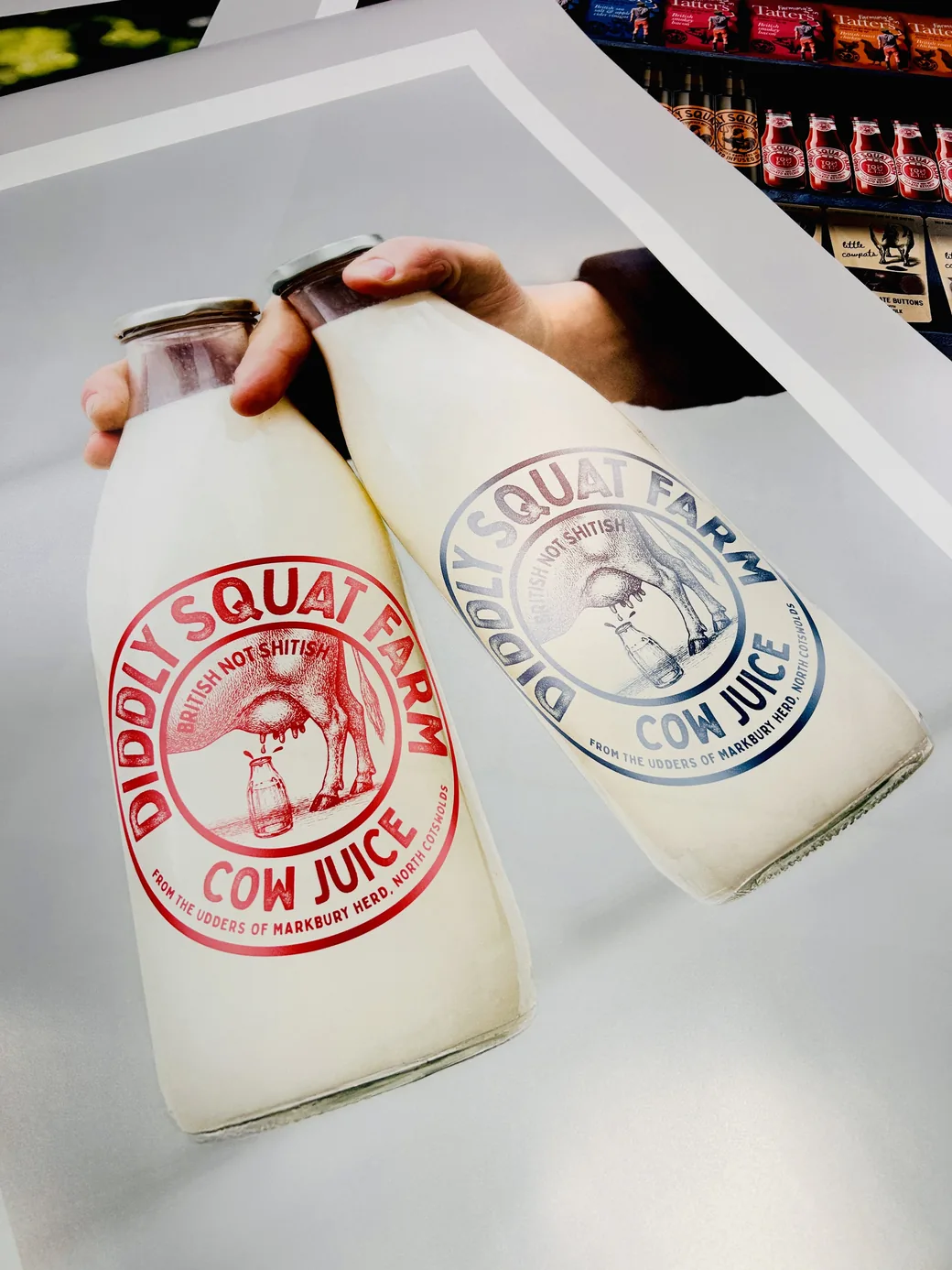
Resolution is the thing that catches people out at this size. Vector linework is scale-free and prints sharp at any size, but photographs and scans need 150 dpi at the finished 841 × 1189 mm to look right. A0 prints leave rolled in a tube as standard; ask if you want them flat. How to prepare artwork for large format covers the full pre-flight.
A1 printing — 594 × 841 mm
A1 is the working size of the construction industry: big enough to carry a full drawing at a usable scale, small enough to open on a plan table in a site hut without knocking over the tea. Half of A0, double A2, and the sheet most planning sets and issued drawing packs arrive on.
Two practical A1 specifications come up constantly. Folded to A4 with the title block facing out: a whole drawing pack drops into a lever-arch file and the right sheet can be found without unfolding six others. And tear-proof stock instead of paper when the drawing is going somewhere wet or muddy — it does not pulp, it wipes clean, and it survives being consulted in the rain.
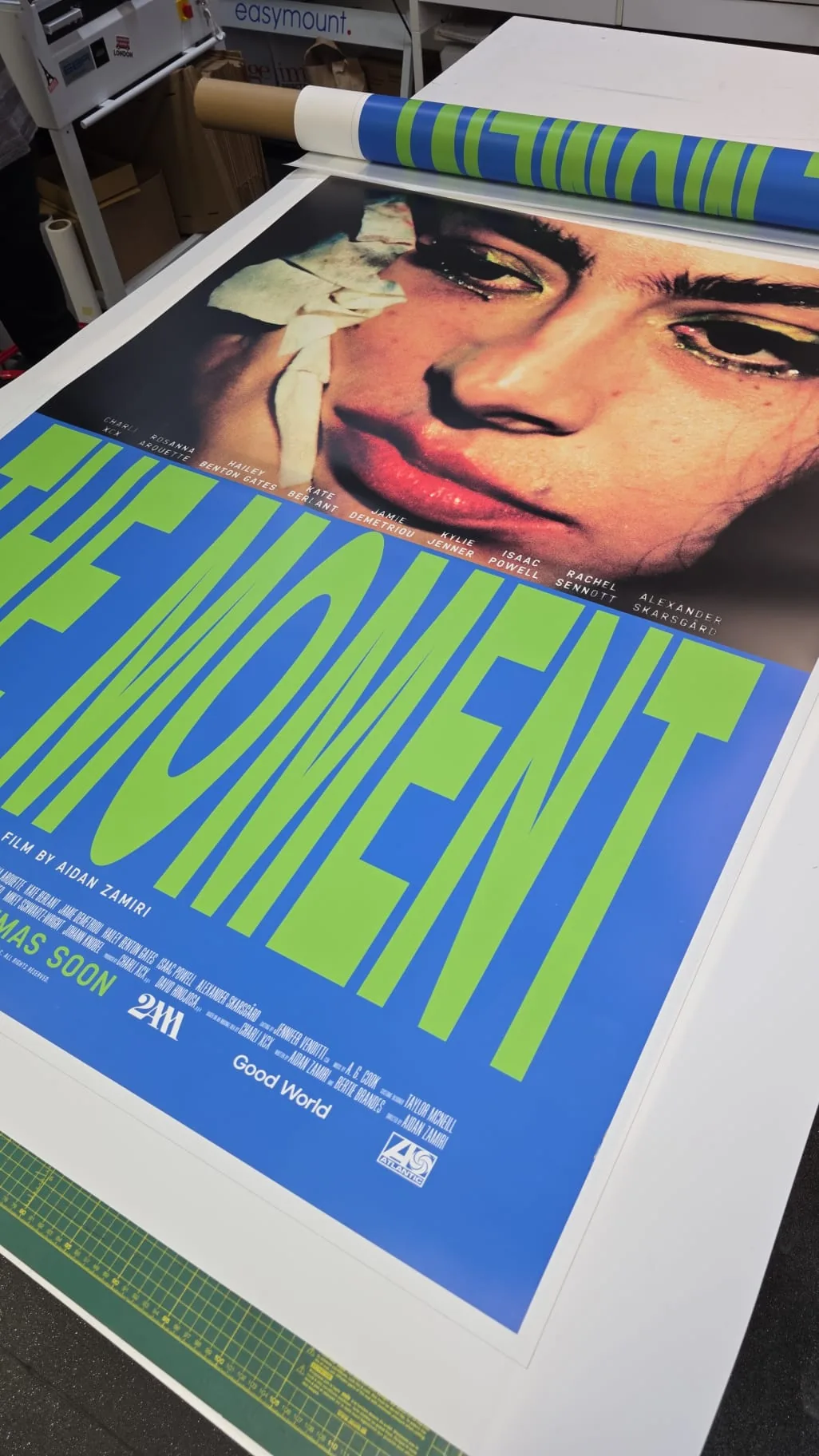
A1 is also the standard poster size for pavement signs, snap frames and easels. Same sheet, different stock: photo satin rather than matt, because a poster is read for impact and a drawing is read for information. If the poster is the whole job rather than part of a print run, our poster printing page covers finishes in more detail.
A2 printing — 420 × 594 mm
A2 is the size that fits where A1 is too much: a shop window, a framed notice by a lift, a gallery print, an information board in a corridor. Half the area of A1, and still large enough to carry a photograph or a full drawing extract with real presence.
Because A2 is usually read from a metre or less, it is the first size where image quality is judged close up. Photographs benefit from more resolution than the 150 dpi working target, and soft or over-compressed images that would pass at A0 across a room will not pass at A2 in a frame.
Common A2 work: retail and hospitality displays, exhibition and gallery prints, framed menus and event schedules, and full-bleed layout proofs for a creative team to check colour and typography at a believable size before committing to a longer run.
A3 printing — 297 × 420 mm
A3 is double A4 and the practical bridge between office printing and large format. It takes a table, a multi-column layout or a drawing extract that will not fit legibly on A4, and it still goes in a folder, a portfolio or a plan bag without being rolled.
It is the size most often ordered alongside something bigger: A0 plans for the wall with A3 copies for the meeting, or A1 posters for the window with A3 versions for the counter. Because the A series keeps its proportions, the same file prints at both sizes with no rework.
Typical A3 jobs: venue menus and notices, site safety information, presentation inserts, counter posters and short-run handouts. Matt where it will be written on or read in detail, photo satin where colour has to carry the page.
| Stock | Weight | Finish | Chosen for |
|---|---|---|---|
| Matt | 200 gsm | Matt, non-reflective | CAD drawings, plans and wayfinding — takes pencil and marker, no glare |
| Photo satin | 200 gsm | Satin | Research and display posters, photographic work, exhibition graphics |
| Polypropylene | — | Tear-proof | Site drawings and notices in wet or high-traffic positions |
| Canvas | 260 gsm | Textured | Display and decorative work, interior prints |
| Cotton rag | 300 gsm | Fine art | Giclée and gallery prints where the paper is part of the result |
Turnaround, packing and delivery
Large format is genuinely same-day work: the machines are loaded and running, so a file approved in the morning is normally printed, checked and rolled within a couple of hours — subject to capacity and the size of the run. Because production runs through the night, files and approval by 21:00 are printed overnight for the morning. There is no fixed cut-off here: capacity decides, so call at any hour and you will get a straight yes or no on your deadline rather than a hopeful maybe.
In Central London a job is typically with you within the hour of coming off the press, by direct courier. Prints go out rolled in a tube as standard, because that is what survives a courier bag and a site office; say so at the order and they travel flat instead, which is worth it for anything going straight into a frame. Drawing sets can be folded to A4 with the title block out for filing — tell us which sheets to fold and which to leave rolled.
Collection is available round the clock. We are open 24 hours a day, 7 days a week, and the minimum order for after-hours collection or delivery is £95 plus courier if required; during normal hours there is no minimum. Call before you set off after 8pm so the job is ready at the counter rather than still on the machine.
Artwork specifications
Scale, resolution, bleed, colour, file format
From A2 to A0 the pixels stretch fast — see what your file can honestly carry.
| Requirement | What we need | Why |
|---|---|---|
| Scale | Artwork at 1:1 finished size — or say clearly what scale it is at | A file built at 1:10 and printed at full size loses ten times the detail. If we know the scale we can check it before printing rather than after. |
| Resolution at final size | 150 dpi at the finished size; 72 dpi is the absolute floor | Measured on the printed sheet, not in the file. Vector linework and type carry no resolution and always print sharp. |
| Bleed | 3 mm where colour or images run to the sheet edge | Sheets are trimmed after printing; bleed is what stops a white hairline along the edge. |
| Colour mode | CMYK, with Pantone references where the colour is the brand | RGB converts on the way to the press; sending a reference is how a brand colour lands where you expect it. |
| Fonts | Converted to outlines, or embedded in the PDF | Removes any substitution risk on an overnight job when nobody can call you to ask. |
| File format | PDF preferred — but send what you have | Every file is checked here before production; if something will not survive at full size we say so before printing, not after. |
Before you upload
- State the size: A0, A1, A2 or A3 — and the quantity of each
- Say what it is for: drawing, poster, or something going outdoors
- Flag any file not built at 1:1
- Say whether sets should be rolled, flat or folded to A4
- Give the deadline — morning delivery prints overnight
Q&A
What are the A0, A1, A2 and A3 paper sizes in mm?
A0 is 841 x 1189 mm, A1 is 594 x 841 mm, A2 is 420 x 594 mm and A3 is 297 x 420 mm. Every step down halves the area of the one above and keeps the same 1:1.414 proportion, which is why an A1 drawing scales onto A3 without redrawing anything - the shape of the sheet never changes.
How fast can A0 or A1 plans be printed in London?
Same day. Large format runs on machines that are already loaded, so a set of plans approved in the morning is normally printed and rolled within a couple of hours, and in Central London a job is typically with you within the hour of coming off the press. Files and approval by 21:00 print overnight for the morning. There is no fixed cut-off: capacity decides, so call at any hour and you get a straight yes or no.
Which paper for CAD drawings, and which for display posters?
Matt for drawings: it holds fine line work without spread, does not glare under a site light, and takes a pencil or a marker on the plan table - which is what drawings are for. Photo satin for display: deeper colour and better contrast under venue lighting. If the sheet is going somewhere wet or muddy, tear-proof polypropylene instead of paper.
What resolution do large format files need?
150 dpi measured at the finished size is the working target, and 72 dpi at full size is the absolute floor below which it shows. The trap is scale: a file built at 1:10 needs ten times the dpi to hit the same quality at A0. Vector artwork - CAD linework, logos, type - carries no resolution at all and is always the better send.
How are A0 and A1 prints packed and delivered?
Rolled and sent in a tube as standard, because that is what survives a courier bag and a site office. Say so when you order and we send them flat instead - worth it for anything going straight into a frame or a presentation folder. Collection round the clock, or courier across Central London.
Can plans be folded for a site file?
Yes. A1 drawings fold down to A4 with the title block facing out, so a set drops into a lever-arch file and anyone can find the right sheet without unfolding all of them. Say which sheets to fold and which to leave rolled - a set for the site hut and a set for the wall usually want different treatment.
Can I collect out of hours?
Yes - we are open 24 hours a day, 7 days a week. Out-of-hours collection or delivery carries a 95 pound minimum order plus courier if required; during normal hours there is no minimum. Call before you set off after 8pm so the job is ready and waiting rather than still on the machine.
When the job outgrows a sheet of paper
Bigger than the largest sheet. Above A0 the answer stops being paper: PVC banners run to 30 m on a single drop, roller banners stand up on their own for conferences and receptions, and exhibition graphics are cut to a stand drawing and delivered to the hall.
The same graphic on a rigid board. A poster that has to stand on an easel or survive outdoors wants a board rather than paper: Foamex foam board for presentations indoors, Correx for temporary outdoor use, Dibond for anything permanent on a building.
Fabric instead of paper. For stands and events: printed tablecloths for the trestle tables, fabric pop-up displays for a seamless press wall, and feather flags for the entrance.
Same machines, different intent. If the job is specifically a poster or a photographic print rather than a sheet at a format, poster printing and canvas printing go into finishes, colour and mounting in more detail.
Often ordered with this
Key facts: ordering tonight
- Open 24 hours, 7 days a week, including Saturdays, Sundays and bank holidays.
- Print production runs 24/7; the walk-in counter serves the day and evening, and the status bar at the top of the page shows live whether it is open right now.
- Files and payment received by 21:00 → overnight production for delivery before 9am the next morning, subject to that night’s capacity; we confirm at quotation whether the run fits.
- No fixed overnight cap: tell us the quantity and we say at quotation whether it can be done in time.
- Overnight jobs are normally couriered to arrive before your office opens; collection is arranged around your arrival time — call before you set off after 8pm so the job is bagged and waiting at the counter.
- No minimum for walk-in jobs during the day — one copy is a normal job. Out-of-hours collection or delivery carries a £95 minimum plus courier if required.
- Same-day and overnight courier delivery across London, most often EC1–EC4, W1, WC1–WC2, E14 and SW1.
- Exhibition delivery to ExCeL, Olympia, the Business Design Centre and other venues: send us the hall, your stand number, the named person on the stand and their mobile, and the build-day or opening time you need it by; we deliver to the stand.
- Send what you have: we check the artwork before anything goes on press and tell you what to fix; a print-ready PDF (CMYK, 3 mm bleed) is the fastest route.
- Quotes come with a secure payment link — Visa, Mastercard, Amex, Apple Pay, Google Pay, PayPal and Klarna; production starts once payment is in.
- Courier delivery within London is usually in the region of £35–45, depending on the postcode and which courier is free; the exact figure is on your quote and is added to the job price.
- A proof is available on request; when we design the artwork you always get a final proof to approve. Print-ready files are printed on site and our operator checks the run against a printed proof sample before it leaves.
- Before we accept an urgent job we look at what could go wrong with the file, the stock and the finishing, and plan so that a reprint would still fit inside your deadline.
- Every order has a dedicated member of staff and an agreed completion deadline; we do not run an e-commerce queue, so the time we give you is for your job.
- Bank transfer is accepted alongside the payment link: tell us when you have sent it — the job goes to production once accounts confirm it has arrived.
- Outside London and towards the M25 courier costs more: we check with the couriers and confirm the price with you before booking.
- Posters on 200 gsm paper, per copy + VAT in one order: A0 £65 (1–4), £52 (5–9), £47 (10+); A1 £40 / £32 / £29; A2 £25 / £20 / £18. Single copies welcome, no minimum quantity.
- Foamex 3 mm boards, per board + VAT: A0 £115 (1–4), £92 (5–9), £83 (10+); A1 £75 / £60 / £54; A2 £50 / £40 / £36. A strut back adds about 30 % (price rounded to the nearest £5).
- PVC banners: £50 per m² + VAT for the first 5 m² and £40 per m² for every m² above that, plus £25 setup per job — a 1 × 2 m banner is £125 + VAT.
Send the file and the size
Size, quantity, what it is for, and whether it should arrive rolled, flat or folded — that is the whole specification. We check the file at full size before anything is printed and come back with a firm price.
Open 24 hours, 7 days a week. Call before you set off after 8pm so we have your prints ready at the counter.
SAP Business Network member registered member
